Artificial intelligence can now generate convincing video of people who were never filmed, saying things they never said. It can clone voices, fabricate interviews, and produce entire brand advertisements without a camera or a crew.
This is not a future threat. It is a current reality. And for South African marketing professionals, communications directors, and brand managers, it raises questions that cannot be deferred: How do you build audience trust when viewers can no longer tell what is real? And what is the competitive advantage of investing in authentic video production in this environment?
What AI-Generated Video Can Now Do
Current AI video generation tools — including systems like OpenAI's Sora, Runway Gen-3, and Kling — can produce photorealistic video from a text prompt. Separate tools can clone a specific person's likeness or voice from a small sample of source material. The practical implications for brands are significant:
- A company could theoretically produce a CEO video message, a customer testimonial, or a product demonstration without any of the people involved ever appearing on camera
- Competitors or bad actors can generate fake brand content — spokespeople saying things they never said, fabricated crisis statements, counterfeit testimonials
- Audiences are becoming aware of this, and their default response is increased scepticism toward all branded video content
The South African Context
South Africa does not yet have specific deepfake legislation, though the Protection of Personal Information Act (POPIA) applies to the use of people's biometric data — including voice and likeness — without consent. The Electronic Communications and Transactions Act provides some recourse for digital fraud.
For marketing purposes, the practical risk is simpler: audiences who discover that a brand used AI-generated talent without disclosure lose trust immediately and publicly. The reputational cost of that discovery consistently outweighs whatever was saved in production budget.
Why Authentic Video Production Has Increased Value
The paradox of AI-generated video is that it has made authenticity more valuable, not less. As synthetic content proliferates, the signals that distinguish real from fabricated carry more weight with audiences. Real people. Real environments. Verifiable production. Consistent brand presence over time.
Real Executives Build Real Trust
An executive video message filmed by a professional crew carries implicit credibility that a synthesised voice cannot replicate. Audiences read authenticity signals in micro-expressions, environmental context, and the texture of real environments.
Real Testimonials Convert Better
Case study videos featuring real clients in real settings — produced to a professional standard — consistently outperform AI-generated or poorly produced testimonial content in conversion metrics.
Real Productions Are Verifiable
Behind-the-scenes content, production documentation, and the long-term consistency of a brand's visual identity provide authenticity markers that AI content lacks.
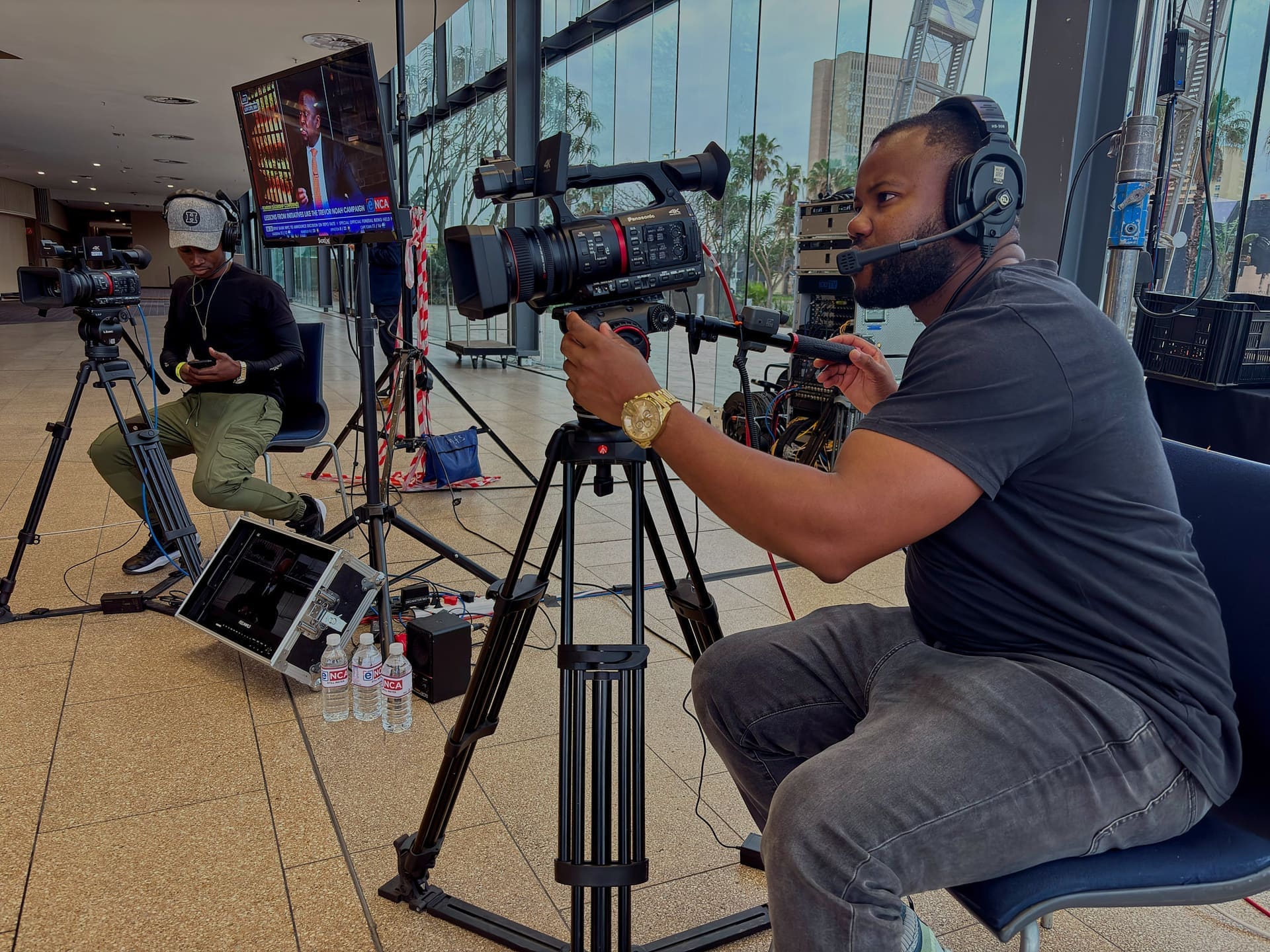
This is where brand film production with real people and real locations creates defensible competitive advantage for South African brands.
Responsible Use of AI in Production
Not all AI in video production is deceptive. Legitimate, transparent applications that South African production companies are already using include:
- AI-assisted editing — Automated rough cuts, scene detection, and transcript-based editing that speeds up post-production without affecting authenticity
- AI translation and subtitling — Generating accurate subtitles and translated voice-overs with human review and correction
- AI colour assistance — Automated colour matching as a starting point for a human colourist
- AI-generated graphics — Visual elements clearly understood by audiences as designed rather than filmed
The distinction that matters is transparency. Using AI to make production faster and more efficient is legitimate. Using AI to fabricate people, statements, or events — and presenting the result as real — is not.
Frequently Asked Questions
Is deepfake content illegal in South Africa?
There is no specific deepfake law in South Africa yet, but POPIA applies to the use of biometric data including voice and likeness without consent. Non-consensual deepfakes can also constitute defamation, fraud, or harassment under existing law.
How do I protect my brand from fake video content?
Register your brand's likeness and spokesperson presence with your legal team. Monitor brand mentions for video content. Publish clear statements about how and where your executives appear on camera.
Should I use AI avatars in my marketing?
Only with full transparency. If you use AI-generated presenters, disclose this to your audience. Undisclosed use that is later discovered creates significant trust damage. For most South African B2B brands, authentic human presence performs better.
Will AI replace video production companies?
For commodity content — simple animations, basic explainers, automated social cuts — AI tools are already cost-competitive. For brand-defining content that requires authentic human presence, strategic storytelling, and professional production quality, human production teams remain the standard.
Does AVL use AI in its productions?
AVL uses AI tools transparently in post-production — for editing assistance, subtitling, and colour correction. We do not use AI-generated talent or fabricated statements in client content. All talent is real, consented, and credited.